Motion Graphics Designer Salary
We’ll walk through pay benchmarks for designers who work with motion and animation in the United States. Our goal is to turn raw numbers into practical guidance so we can decide which roles to target and which skills to invest in next.
Community data show wide ranges: Uxcel reports an average near $65,000 from over 300,000 designers, while a School of Motion poll found averages around $62,000 and $65,000 for freelancers. The BLS lists a higher median of $77,700 for related animator roles. We’ll explain why these figures differ and what each dataset measures.
We’ll define what typical pay includes — base, bonuses, overtime, day rates, and contract income — and set expectations for mixed full-time and freelance work. That frames the buyer’s guide we use to negotiate offers, choose target roles, and build a realistic career plan rather than chasing a single average.
Motion Graphics Designer Salary in the United States: Current Benchmarks and Pay Ranges
We present a compact view of current U.S. pay benchmarks and show how reported numbers map to real roles. Below we compare the most-cited data points so you can judge offers and plan next steps.
Typical salary per year: averages from reports and polls
Uxcel reports a U.S. average near $65,000 per year. School of Motion’s poll (2017) shows an average of $62,000 per year and a freelance average of $65,000.
Overall salary range: what low to high looks like
Ranges vary by source. Uxcel spans roughly $35K–$120K. School of Motion centers around $40K–$83K. BLS shows a wider market spread.

| Source | Median / Avg | Reported Range | Notes |
|---|---|---|---|
| Uxcel | $65,000 / year | ~$35,000 – ~$120,000 | Large designer sample; self-reported |
| School of Motion (2017) | $62,000 / year | $40,000 – $83,000 | Includes freelancer average $65,000 |
| BLS (May 2020) | $77,700 median | $42,390 – $142,750 | Classified under Special Effects Artists & Animators |
| Glassdoor | $67,059 median | Examples: NBCU $102,653; ESPN $68,227 | Voluntary reports + postings |
How BLS figures compare to self-reports
BLS medians often sit higher because they include adjacent roles and higher-paying employers. Self-reported averages reflect varied contract mixes and smaller samples.
Quick decision filter: if an offer is below these ranges, ask about scope, overtime rules, benefits, and title accuracy before accepting.
How Much Do Motion Graphics Designers Make by Experience Level?
We outline pay bands tied to common experience levels and the responsibilities that come with them. Below we define entry, junior, mid, and senior roles the way hiring teams use them. Each level links years and duties to realistic pay expectations.
Entry-level
Entry roles (0–1 year) often start with a lower base while you build a portfolio and demo reel. Uxcel shows an entry average near $35,000 per year.
This tradeoff is typical: lower pay in exchange for time on real projects and mentorship.
Junior (1–3 years)
Junior designers typically own small deliverables and work in teams. Uxcel reports about $72,500, while Glassdoor’s 1–3 years signal is $59,590.
The gap reflects title differences, employer type, and whether benefits or freelance income are included.
Mid-level (3–8 years)
Mid-level roles handle bigger projects with more stakeholders. Uxcel’s benchmark is roughly $80,000 per year.
Expect longer timelines, tighter brand rules, and increased responsibility for process and quality.
Senior (8+ years)
Senior targets land much higher when the role includes leading systems, guiding people, or owning major campaigns. Uxcel cites about $110,000.
Some senior listings still pay mid-level rates when scope is narrow. Scan job descriptions for terms like “lead,” “own,” and “mentor” to spot true senior work.
- Negotiation checklist by level: measurable outcomes, portfolio proof, project leadership, and clear process descriptions.
- Career tip: pick roles that add responsibility gradually to raise pay without burning out.
| Level | Typical years | Uxcel avg | Glassdoor signal |
|---|---|---|---|
| Entry | 0–1 | $35,000 | — |
| Junior | 1–3 | $72,500 | $59,590 |
| Mid | 3–8 | $80,000 | $65,867 (4–6 yrs) |
| Senior | 8+ | $110,000 | $69,881 (7–9 yrs) |
Where the Money Is: Location, Industry, and Job Type Differences
A location, industry, and contract choice change earnings more than most people expect. We look at city data and BLS industry medians to show which markets and sectors pay above average.
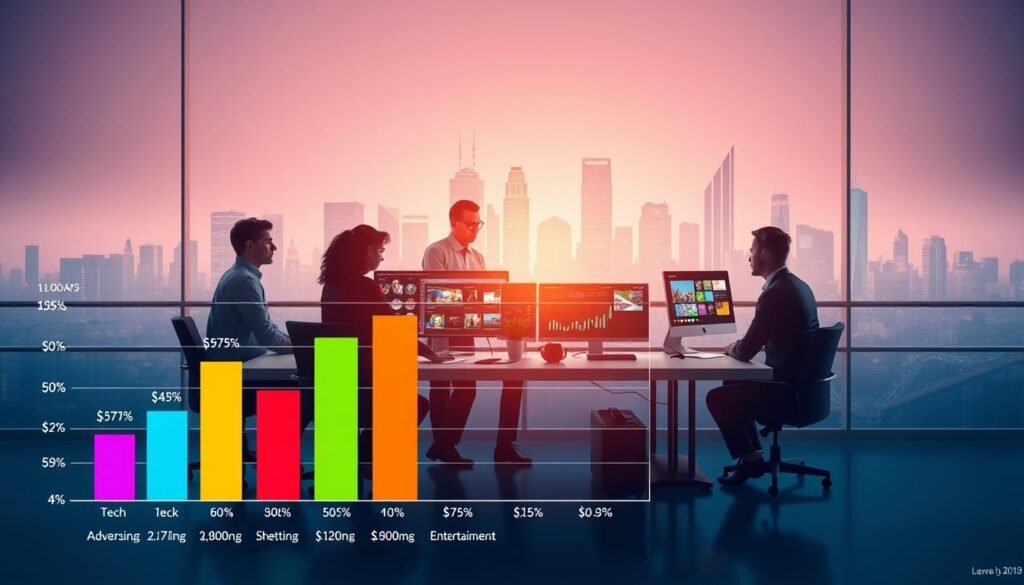
Top cities and the cost‑of‑living effect
San Francisco leads with an average near $85K and a wide range ($56K–$147K). That range shows high demand for niche skills and leadership roles.
Los Angeles and New York both average about $64K but differ in work patterns. LA skews contract-heavy; NYC mixes agency and in‑house jobs.
Industry pay differences
| Industry | Median (BLS, May 2020) | Typical work |
|---|---|---|
| Motion picture & TV | $92,350 | Feature/episodic pipelines |
| Software publishers | $82,330 | Product UI and systems motion |
| Advertising & marketing | $73,820 | Campaign content for agencies |
| Computer systems design | $69,200 | Enterprise product and UI work |
In‑house vs freelance
Freelance motion work can raise annual income for some designers but adds volatility and business overhead. Permanent roles offer steadier pay and benefits.
- Choose a high‑cost city for density and agency pipelines.
- Stay remote and specialize to compete without relocating.
What Actually Raises a Designer Salary: Skills, Tools, and Proof of Work
Let’s focus on the skills, proof points, and workflows that employers pay a premium for.

Portfolio and demo reel standards
Proof of work means a clear portfolio and a tight demo reel that show thinking, not just polish. Label your role on each piece and show short breakdowns: styleframe → comps → final animation.
Tailor reels to the clients you want. For product roles, show UI motion and system work. For ads, show story and pacing.
Core skills that move pay
Employers reward storytelling, strong animation theory, and visual design fundamentals. These reduce revisions and make content perform better.
Color, type, and pacing are measurable outcomes. They link directly to retention, conversions, and fewer review cycles.
Specialized advantages and learning plan
3D and CAD lift you into high-value projects in film, product viz, and brand work. Advanced effects pipelines also open premium opportunities.
- Pick courses by target industry: ads, product, or film.
- Invest in networking and communication to turn projects into repeat clients.
| Target Industry | Best Skill Focus | Recommended Learning |
|---|---|---|
| Advertising | Story + effects | Short narrative courses |
| Product | System motion + collaboration | UI motion & workflow courses |
| Film/TV | 3D + advanced pipelines | 3D/CAD and compositing courses |
Making the Salary Data Work for Your Career Plan
We turn the numbers into a clear plan you can use to raise your pay and shape the next few years of your career. Pick a target per year based on your current experience and the range you want to hit.
Choose an industry and map a realistic gap between today’s designer salary and the next role. Use BLS medians, Uxcel averages, and live job posts to triangulate offers and tune expectations by city or remote work.
Decide if you prefer steady in-house jobs or contract work with higher upside and more business overhead. Refresh your portfolio quarterly, rebuild the reel to match target roles, and collect outcomes-based case studies.
Quick checklist: pick a salary target, ID two skill gaps, enroll in one course or mentor program, and reach out to people who can open doors to better projects.