
What is Video Marketing
We define this concept in plain language and show what the guide covers. At its core, it uses moving images and sound in digital and social channels to build brand awareness and engage a chosen audience.
We treat this approach as a modern digital medium that helps us earn attention in an oversaturated online world. Our plan centers on creating visual content that attracts viewers and supports measurable business outcomes.
Unlike static posts, motion plus sound lets us tell stories that hold attention. That mix makes our pieces more memorable and better at driving actions.
Scope here focuses on digital and social use across platforms and formats, not traditional TV ads. We will link strategy, production, distribution, SEO, and measurement so readers can move from concept to measurable results.
What is Video Marketing</h2>
Here we outline how crafted clips serve as strategic assets across web and social channels.
Video as a digital and social practice
We treat video marketing as a branch of digital promotion that overlaps with social media and content work. It differs from TV ads by targeting online habits and measurable actions.
As a marketing strategy, each piece of filmed content should aim for a clear outcome: awareness, engagement, leads, or sales.
Storytelling builds connection and trust
Stories let us humanize a brand. Narratives show problems, relate to people, and lead to solutions.
- Pain point → resolution: a product clip that shows relief.
- Before/after: customer stories that prove change.
- Shareable, consistent formats that grow long-term awareness.
Video conveys emotion through voice, expression, and pace. When we plan each piece to fit the funnel, creativity drives clarity and business impact.
Why video marketing matters for business today</h2>
Today, motion-driven content grabs attention faster than static posts in crowded feeds. For our teams, that means we can reach an audience with fewer distractions and clearer outcomes.
Higher engagement in a fast-moving, oversaturated media environment
Motion naturally stands out in a stream of images and text. Watch time, shares, and reactions compound distribution and extend reach beyond initial viewers.
How videos influence buying decisions and sales conversions
Adults are 73% more likely to buy after watching a product clip. That lift matters on conversion pages where clear demos or short testimonials reduce hesitation and improve sales.
Better ways to explain complex products and services
We cut friction by showing how things work instead of asking users to imagine them. A quick demo or explainer clarifies value and speeds decision-making.
Global reach and improved on-site user experience
Embedded media keeps visitors on-page longer and guides them to the next step. Subtitles and transcripts make content usable across borders and boost accessibility for customers everywhere.
How video marketing works from idea to results</h2>
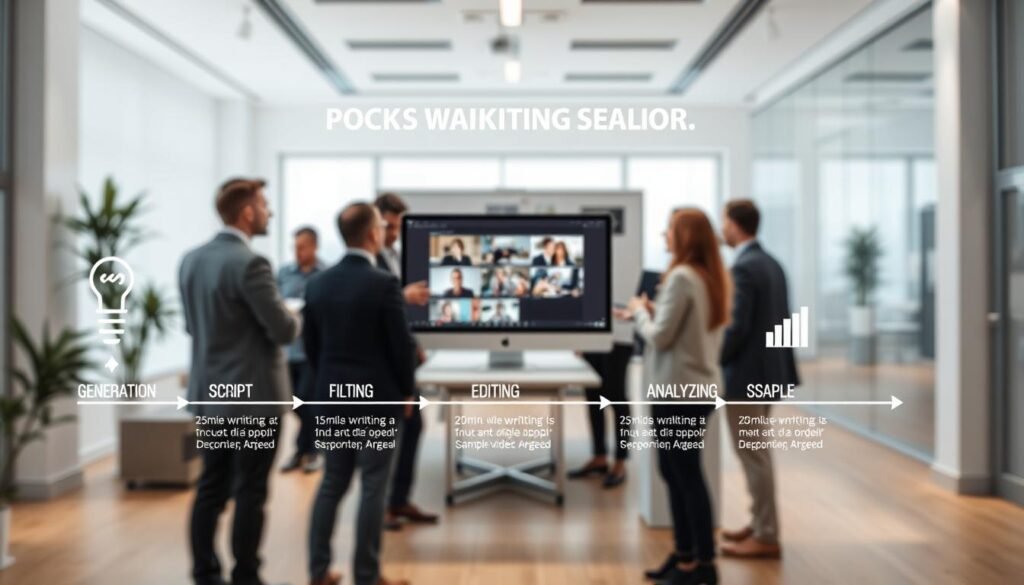
From brief to launch we follow a repeatable workflow that turns creative energy into measurable gains. We set the outcome before we shoot so every decision ties back to business goals.
Setting clear goals and defining success metrics
We pick one primary goal for each campaign: awareness, leads, sales, or retention. Then we choose metrics that match that goal, like view count for reach or CTR for conversions.
Knowing our audience and tailoring content
We profile the audience and adapt tone, length, and hook to fit people’s preferences. Short reels work for quick attention; longer explainers fit consideration-stage viewers.
Choosing platforms where viewers spend time
Platform choice is strategic. We publish on YouTube, Instagram, TikTok, LinkedIn, or Facebook depending on format and where our viewers already engage.
Promoting across social media, email, and our website
Posting alone rarely drives results. We cross-promote, add CTAs on-site, and send targeted email to amplify reach and encourage engagement.
Measuring performance and iterating
We review metrics—watch time, CTR, demographics—identify what worked, and refine the next video. Over time, consistent efforts compound into sustained success.
| Goal | Key metric | Best platform |
|---|---|---|
| Awareness | Views / Reach | YouTube / TikTok |
| Consideration | Watch time | Instagram / Facebook |
| Conversion | CTR / Leads | Website / LinkedIn |
Aligning video with the marketing funnel and customer journey</h2>
Each stage of the funnel calls for different video types that match viewer intent and readiness. We map formats to the buyer journey so every clip serves a clear purpose, not just a sales pitch.
Awareness: introduce the brand
Top-of-funnel clips should welcome strangers and build recognition. Short explainers, social reels, and teaser content communicate relevance and spark curiosity.
Consideration: highlight features and benefits
At this stage we use demos and deeper explainers to show product value. Clear, credible content compares features and clarifies differentiation without pressure.
Decision: prove value and reduce risk
We deploy testimonials, case studies, and side-by-side comparisons to build trust. These videos shorten the path to conversion and support sales conversations.
Retention: support customers and strengthen loyalty
Post-sale how-tos, onboarding clips, and tips reduce churn and deepen connection. Reusing long-form material as short clips helps sustain engagement across stages.
- Match CTA and distribution to viewer stage for better campaign performance.
- Reuse content smartly—trim webinars into short clips for awareness or demo excerpts for consideration.
Building a video marketing strategy that fits our goals and budget</h2>
Our approach centers on measurable goals, realistic timelines, and production choices we can sustain.
Creating SMART goals we can measure
We convert vague aims into SMART goals: specific, measurable, achievable, relevant, and time‑related. For example, improve landing page conversion by 12% within 90 days by adding short product clips and a new CTA.
This clarifies the goal, the metric, and the time we use to judge success.
Choosing a realistic budget, timeline, and production approach
Video often costs more than text, so we pick a budget that fits our business reality. We choose in‑house, freelance, agency, or hybrid production based on scale and skill.
We map stages—scripting, filming, editing, feedback, approvals—and add padding for review to avoid last‑minute risk.
Planning a consistent content calendar
Consistency builds habits and predictable performance. We schedule formats, publish cadence, and reuse assets so content work stays sustainable.
Start lean: prioritize clear framing and good audio to look professional on a modest budget. Then plan, publish, learn, and improve the strategy over time.
Types of marketing videos we can create for products and services</h2>
We offer a practical menu of formats that align with audience intent, distribution channel, and campaign goal. Pick types that match where viewers sit in the journey and the action we want them to take.

Explainer
Explainer videos give clarity fast. They tell users who we serve, what we offer, and why it matters.
Demo and product demonstrations
These show how products work. They reduce confusion and speed evaluation for buyers.
Testimonials and case studies
Customer stories build trust at decision time. Real results and quotes shorten the path to purchase.
Tutorials and educational content
How-to videos drive engagement by giving value first. They position us as helpful experts.
- Brand stories humanize the company and make our message memorable.
- Behind-the-scenes and live events deepen connection with customers.
- Short-form reels and stories boost reach on social media and trend cycles.
- Animated, interactive, and expert interview formats increase participation and authority.
Planning content that keeps viewers watching</h2>
We design each piece so the opening answers a need and the rest earns the viewer’s trust. Strong planning ties story, pace, and purpose together so viewers stay longer and act. Below we describe practical steps we use to shape content that performs across platforms.
Story-first scripting that resolves a customer pain point
We start with a clear problem the customer faces. Then we show stakes and a concise resolution. Even product videos follow this arc: quick pain, simple demo, clear outcome.
Calls to action that match our campaign goal
Every CTA must serve the campaign objective. If the goal is leads, we ask for a demo or sign-up. For awareness, we invite a follow or share. Vague asks dilute performance and lower CTR.
Balancing creativity with clarity for our audience
Creativity draws attention; clarity keeps it. We use fast pacing, short intros, and obvious signposts so busy viewers understand the offer even while multitasking.
- Plan versions: full-length, cutdowns, and teaser clips without losing the core story.
- Match tone and length to the audience and channel for better engagement and watch time.
- Measure watch behavior and iterate to improve performance over time.
Production essentials that make videos look and sound professional</h2>
Small, smart choices during setup make a big difference in how our clips read on screen. We focus on practical steps that save time and raise quality on a tight budget.
Choosing the right background, framing, and lighting on a budget
Pick a background that supports the story and reduces post work. Neutral walls, simple props, or a tidy office cut distractions and speed editing.
Basic three‑point lighting can be built for under $100. Small LED panels or DIY diffusers soften shadows and lift perceived production value.
Audio fundamentals and picking the right microphone
Bad sound ruins trust. We make sure dialogue is clear and free of noise; a short test saves long fixes later.
| Mic type | Best use | Notes |
|---|---|---|
| Lavalier | Interviews | Close, consistent audio |
| Shotgun | On‑camera | Directional, needs boom skill |
| USB | Remote recording | Easy, room‑dependent |
Editing workflow basics and software considerations
We follow a repeatable workflow: organize footage, pick selects, add B‑roll, fix audio, captions, then export platform formats. This protects our publishing cadence.
Choose software that fits team skill, collaboration needs, and templates. Time saved in the editor pays back in consistent content and better marketing outcomes.
Where to publish and share videos for maximum reach</h2>
Distribution choices shape reach, lead capture, and the viewer experience for every campaign.
YouTube and social platforms for discoverability and awareness
We publish on YouTube to tap search-driven discovery and broad awareness. The platform surfaces clips to new viewers but often keeps them on-site.
On social media we adapt format and length to each channel. Native posts meet viewers where they spend time and boost shareability.
Embedding on our website to improve experience and capture leads
Embedding content on product, pricing, or landing pages gives us control. We reduce distractions, add CTAs, and capture leads with forms or gated assets.
Using email to drive views, clicks, and conversions
Email campaigns increase targeted clicks when we use strong thumbnails, clear subject lines, and tight segmentation. Timed sends aligned with a launch or offer lift conversions.
- Choose channels by goal: reach, consideration, or direct sales.
- Balance discoverability with on-site control to protect conversion paths.
- Measure where viewers convert and reallocate time and spend accordingly.
Video SEO fundamentals to help our content get found</h2>
To earn qualified traffic, we must treat each clip as a searchable asset. Good SEO ties titles, page copy, and technical signals to user intent so our clips reach people ready to act.
Optimizing titles, descriptions, tags, and on-page context
We write clear titles that include intent keywords and a concise benefit. Descriptions should summarize the clip and link to related content on the page.
Tags and surrounding headings give search engines context. Place the clip near relevant text so the page topic and video align.
Adding transcripts and accessibility elements that support search
Transcripts add indexable text and help users who read or watch without sound. Captions and descriptive alt text improve access and reduce bounce.
Structured data and indexing signals for embedded content
We add JSON‑LD video schema for embedded clips so engines can show thumbnails in results. Then we validate by checking if a thumbnail appears for the page URL in video search.
These efforts shift traffic from broad views to intent-matched visits that boost conversion and overall success.
How to create a video marketing campaign that stays on track</h2>
A disciplined campaign keeps creative work aligned with timelines, owners, and measurable outcomes. We begin with clear objectives and a short list of target customer segments so each video serves a defined purpose.
Defining objectives, segments, and key messages
We state one primary goal per campaign and one or two secondary goals. That focus makes priorities clear during scripting and edits.
Next, we map two to three customer segments and attach a tailored key message to each. Simple message discipline says what we want viewers to remember, how we want them to feel, and what action to take.
Platform selection and a sustainable posting schedule
Platform choice follows audience habits and format fit. We pick a primary channel and two support channels to avoid stretching resources thin.
Then we set a posting cadence we can sustain. If we can’t keep the schedule, performance and learning suffer.
Cross-promotion and community management
Cross-promotion ties social, email, and the site into one launch flow. We prepare snippets, thumbnails, and short captions in advance.
Community work—replying to comments and gathering feedback—boosts engagement and feeds creative improvement.
Review cycles, approvals, and stakeholder alignment
We adopt fixed review windows: draft, select, approval, and final sign-off. Clear owners reduce rework and protect brand consistency.
- Timelines with owners and deliverables keep campaigns on schedule.
- Segmentation and key messages cut wasted reach and improve results.
- Regular reviews speed decisions and lower last‑minute changes.
| Step | Owner | Outcome |
|---|---|---|
| Objective setting | Campaign lead | Aligned goals |
| Content production | Creative team | Ready videos |
| Distribution | Channel manager | Scheduled posts |
Measuring video marketing success with the right metrics</h2>
Success means studying viewer signals to improve the next script, not just counting plays. Measurement separates casual posting from a real video marketing program that learns and scales.
We track a mix of reach, quality, and outcome metrics so each clip ties back to a campaign goal. The aim is clear: use data to make better creative and distribution decisions.

Reach and relevance: view count and play rate
View count shows reach; play rate reveals whether our thumbnails and copy matched expectations. Low play rate often points to weak packaging or poor targeting.
Engagement: watch time, shares, and reactions
Watch time is our top quality signal. Longer average watch indicates content that holds attention.
Shares, comments, and reactions tell us if viewers found the content useful or shareable.
Conversion: CTR and lead capture performance
We measure click-through rate for CTAs and track leads captured from landing pages. These metrics tie the clip to a tangible result and the campaign goal.
ROI: tying production spend to sales impact
ROI equals sales attributable to the campaign divided by production spend. We use simple attribution windows and test cohorts to estimate sales lift before scaling spend.
Metrics are diagnostic. High views but low watch time suggest we change the hook. Strong watch time with low CTR means our CTA or landing page needs work. We let these signals guide edits, distribution changes, and budget shifts.
| Metric | What it measures | Action if low | Recommended benchmark |
|---|---|---|---|
| View count | Reach and awareness | Boost distribution or change thumbnail | Varies by channel; compare to past campaigns |
| Play rate | Relevance of thumbnail/copy | Rewrite headline; test thumbnails | 40–60% good starting point |
| Watch time | Content quality and retention | Edit for pace; improve opening hook | Average view duration >30% of video |
| CTR / Leads | CTA performance and conversion | Refine CTA, landing page, and targeting | CTR benchmarks vary; track cohort lift |
Connecting video to our broader marketing stack</h2>
When we feed viewing signals into our stack, sales and nurture flows gain real-time intent data. This turns passive views into actions we can score, segment, and route. We treat each clip as part of a demand pipeline, not just a brand asset.
Lead generation and nurturing with video in demand generation
We gate demos, host webinars, and use mid-funnel clips to capture leads and educate prospects. Those interactions tell us who watched, how long, and what they skipped. That informs follow-up priority and personalized messaging.
Passing viewing data into CRM and automation for smarter follow-up
We integrate platforms with HubSpot, Marketo, or Pardot so viewing events become CRM activities. That data updates lead scores, triggers email sequences, and routes hot leads to sales for rapid contact.
- Gated demo → form capture + lead score bump
- Webinar attendance → automated nurture sequence
- High-intent watch (demo >70%) → sales alert and call task
| Use case | Trigger | Action |
|---|---|---|
| Gated demo | Form submit | Create CRM lead, start nurture workflow |
| Product demo | Watch time >70% | Increase score, notify rep |
| Webinar | Registration + attendance | Assign to campaign, send replay |
Disadvantages of video marketing and how we mitigate the risks</h2>
We must weigh real drawbacks so our plans stay realistic and deliverable.
Time, resource, and technical barriers
Producing good clips takes time, skill, and gear. Scripting, filming, edits, and approvals hide extra work that blows a budget and schedule.
We limit risk by keeping formats simple, batching shoots, and reusing templates. This saves time and reduces reliance on outside vendors.
Platform dependency and content saturation
Algorithms change and feeds get crowded. Relying on one channel can cut reach overnight.
We diversify distribution, repurpose long assets into short cuts, and test hooks so we earn viewer attention across platforms.
Reducing message misunderstandings
Complex ideas can confuse people and harm brand trust. Plain language and short tests with real users reduce this risk.
We validate scripts with stakeholders, run small pilots, and add captions to make intent clear for all viewers.
| Risk | Impact | Mitigation | Owner |
|---|---|---|---|
| High production time | Delays, extra cost | Batch shoots; reuse templates | Creative lead |
| Platform change | Loss of reach | Multi-channel plan; paid support tests | Channel manager |
| Message confusion | Lower conversions | Script reviews; pilot tests | Content strategist |
Making video marketing a repeatable growth engine for our brand</h2>
We turn creative work into a steady growth loop by linking planning, production, and performance. A clear video marketing strategy keeps each release tied to specific goals and measurable outcomes.
We build a feedback loop from metrics to creative choices so every new video improves odds of success. Consistent publishing strengthens brand memory and helps our business compound results across channels.
Before scaling, we make sure quality and cadence are sustainable. Documented templates, checklists, and briefs keep efforts efficient as companies add more types of videos and formats.
Each quarter we revisit goals and update the marketing strategy. Done over time, this approach turns video into a repeatable engine for awareness, demand, sales enablement, and retention.