How to Make Effective Marketing Videos
We believe video is no longer a “nice to have.” It is a core content channel and a long-term growth engine for brands in the United States.
In this guide we define what “effective” means in business terms: clear goals, sensible investment, and repeatable measures of success. We frame outcomes, set expectations, and show how video supports a smart marketing strategy.
Our process is simple and repeatable: strategy first, then formats, platforms, production, editing, distribution, SEO, and ongoing optimization. We cover short-form work for discovery and longer-form pieces for trust, education, and search intent.
We will show concrete examples from brands that act like media companies and use series-based video content. Our core rule: choose formats and creative moves based on audience needs and clear goals, not on chasing trends.
Why video marketing matters in today’s marketing strategy
Short, moving images win attention faster than text or still photos in crowded feeds. We see networks and recommendation engines push clips front and center, so our content must meet viewers where they scroll.
Video as the champion of attention on social feeds
On social media, video often stops the scroll. Short-form content delivers high return on investment for many teams and captures immediate attention from our target audience.
Brand recognition, engagement, and discoverability
Visuals help people remember our brand and message. Video lifts engagement by combining motion, sound, and quick storytelling. Platforms reward this with wider placement and more impressions.
Where clips show up now
- Reels, TikTok, and YouTube Shorts for rapid discovery.
- Social search inside TikTok, Instagram, YouTube, and Reddit communities.
- Google SERPs and live search tools that surface hosted clips beyond followers.
We compete with creators and publishers, so we must think like a media company. That means a mix of platform-native short content and website-embedded assets that support consideration and conversion across the funnel.
Define what “effective” means for our business goals and results
We measure video by the business outcomes it produces, not by views alone. That means each asset must link to a clear funnel stage and a measurable goal.
Aligning content with the funnel
We map common outcomes to stages: reach and recall for awareness; education and demand for consideration; proof and friction reduction for decision; onboarding for adoption; and user advocacy at the top end.
Setting SMART goals we can measure
Our framework is simple: one primary goal, one secondary goal, and one next action per asset. Goals must be specific, measurable, achievable, relevant, and time-bound.
- Example: improve landing page conversion by 10% within six weeks by adding a product demo video.
- Metrics by stage: views and reach for awareness; watch time and clicks for consideration; conversion rate and pipeline influence for decision.
- We avoid “go viral” as a target and focus our campaign efforts on outcomes we can influence.
How to Make Effective Marketing Videos with a clear video marketing strategy
A clear video plan ties every clip back to a measurable business goal. That alignment defines our video marketing strategy and keeps creative choices focused on outcomes rather than trends.

Choosing types based on outcomes, not trends
We select types of content by the job they do: educate, prove, convert, or retain. Short clips can spark discovery; longer episodes build trust and answer search intent.
What stays consistent across campaigns
We lock in an always-on message, a recurring format, and a predictable cadence. Consistency helps viewers recognize our series and recall our brand.
Planning for sustainability
Episodic content trains return viewing and reduces audience churn. Lo-fi formats speed production and feel authentic, while higher production is saved for flagship assets.
- Batch shoots, templates, and reusable scripts cut time in production.
- Design series around customer questions and measurable goals.
- Use AI for storyboards and audio cleanup as accelerators, not replacements.
Choose the right types of marketing videos for our audience and product
We pick video types by the job they do for our audience and product, not by format alone. Each format should answer a clear question in the funnel and reduce friction for the customer.
Educational and tutorial content that builds expertise
Short tutorials and technique clips teach customers how a product works and lower support requests. Peloton-style lessons and step-by-step guides create repeatable assets we can repurpose across channels.
Explainer pieces that cut friction
Concise explainers clarify what our products services do and fast-track onboarding. Asana-like beginner guides show features in context and reduce hesitation during purchase.
Product demos that visualize value quickly
Demos spotlight use cases and highlight outcomes. Engineer-led demos, like Dyson’s, focus on mechanics and benefit, helping customers see value in seconds.
Testimonial videos that raise trust and conversion rates
Customer stories and testimonial videos work near decision points. Placed on product pages and landing pages, they reduce perceived risk and lift conversion rates.
Behind-the-scenes and company culture clips
Factory tours and culture vignettes humanize our company and strengthen brand affinity. These pieces build trust and make our brand feel real.
Thought leadership, interviews, and narrative storytelling
Longer interviews and founder stories build authority and loyalty beyond transactions. Examples like Canva’s executive conversations or Sweetgreen’s farmer narratives deepen audience connection.
- Demand creation: prioritize educational content and POV pieces.
- Demand capture: prioritize demos and testimonial content near product pages.
- Mix formats so each asset serves a clear audience need and product goal.
Pick platforms and channels that match our audience and time investment
Platform selection is the practical choice that balances audience fit and what our team can sustain. We focus on where our viewers already spend time and pick a realistic channel stack.
Instagram, TikTok, and YouTube Shorts for short-form discovery
These platforms share the 9×16 vertical standard, which makes cross-posting efficient. Short clips are great for testing hooks and building top-of-funnel reach quickly.
YouTube for search-driven tutorials and episodic series
YouTube acts as our search home for evergreen content. Longer explainers and series live here for intent-based discovery and sustained traffic to our blog and site.
LinkedIn, Facebook, Pinterest, and Reddit roles
LinkedIn is ideal for B2B storytelling and customer success. Facebook still aids broad reach and paid distribution.
Pinterest captures planning intent and evergreen tutorials. Reddit works when we lead with useful, community-first posts rather than ads.
- One primary channel, one repurposing channel, and one search home keeps effort sustainable.
| Channel | Primary use | Best fit |
|---|---|---|
| Short-form platforms | Discovery & testing | Reels, Shorts, TikTok |
| YouTube | Search & series | Tutorials, evergreen |
| LinkedIn/Reddit/Pinterest | Credibility & niche discovery | B2B, communities, planners |
Build a repeatable pre-production process that saves time in editing
A tight pre-production routine shrinks edit time and raises final quality. We set clear goals, map audience needs, and lock the opening hook before a single clip is recorded.

Audience, message, and hook planning for the first few seconds
We choose a strong opening that leads with a problem, a payoff, or a surprising fact. This step ensures the audience reacts in the first three seconds and lowers drop-off.
Scriptwriting that balances clarity with authenticity
We write short outlines, not rigid lines. Natural language keeps delivery real and saves time in ADR. A single clear message beats dense copy every time.
Storyboards, shot lists, and B-roll planning (including AI)
Storyboards remove guesswork. Shot lists and planned B-roll cover jump cuts and illustrate claims. We use AI for draft frames and noisy audio cleanup, while creative control stays with us.
Choosing locations, backgrounds, and props
We pick simple, uncluttered backgrounds and reliable lighting. Good choices prevent costly fixes and cut post-production time.
- Create a pre-production checklist: goal, audience, hook, script outline, shot plan.
- Batch multiple pieces in one shoot day for a sustainable production rhythm.
| Planning element | Purpose | Time saved |
|---|---|---|
| Hook | Reduce early churn | High |
| Shot list | Eliminate guesswork | Medium |
| Background choice | Minimize fixes | High |
Video branding that makes our content recognizable across platforms
A clear brand kit ensures our media stands out even when platforms strip context. We define visual and audio rules so viewers can match a clip to our company in a single glance.
Visual identity: color, type, motion, and on-screen text
We set a small palette, brand typography, and motion templates that scale across feeds. On-screen text uses readable sizes and contrast for mobile viewing.
Sound identity: music, VO tone, and audio treatment
We pick a music style and voice-over tone that fit our brand. A repeatable audio treatment — consistent levels and fades — keeps our media feeling cohesive.
Creator-led clips versus in-house control
Creators bring speed and trust; in-house work gives tighter brand control and compliance. We pick the approach by campaign risk and conversion goals.
- Simple video brand kit so clips are recognizable when reposted.
- Visual standards: colors, type, lower-thirds, and mobile-first text.
- Sound guidelines: music cues, VO notes, and consistent mixing.
- Subtle branding for native posts; explicit marks for demos and ads.
- Brief creators with talking points, do/don’ts, and approved claims.
Recognition raises watch-through and makes future content easier for viewers to pattern match. That linkage helps our marketing efforts scale with less friction.
Production essentials: lighting, audio, and framing that keep people watching
Production basics—light, sound, and framing—decide if an audience keeps watching within seconds.
Lighting basics for clean, shadow-free shots on any budget
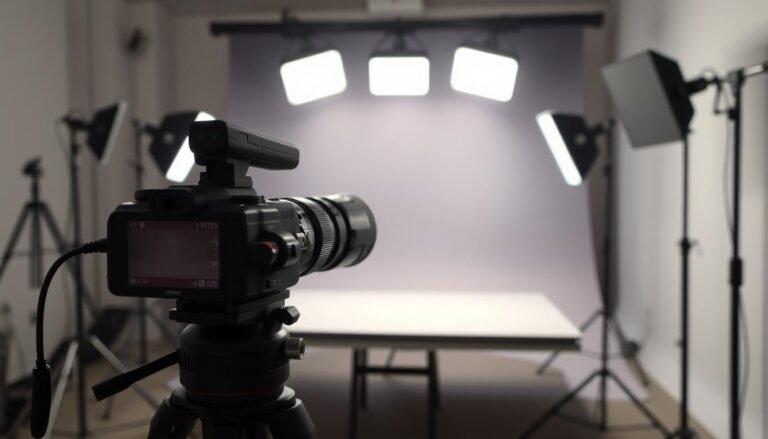
Use soft, even light. Window light with a diffuser or a two-light kit gives clean exposure with little setup. Avoid mixed color temperatures; set white balance before recording.
Microphones and audio capture that prevent “scroll-past” quality issues
Audio beats perfect image every time. We prefer an external lavalier or shotgun mic over built-in mics. Record in a quiet room and monitor levels briefly before you start.
Shooting for multiple formats (especially 9×16 vertical video)
Plan framing for vertical and horizontal crops so one session yields assets for platforms and social media. Keep the subject centered with safe headroom and an eye line near the lens.
Recording solo vs. bringing in pros for high-stakes assets
Solo shoots work for quick education and behind-the-scenes clips; they save time and scale. For testimonials, product demos, or ads we hire pros to ensure trust and conversion.
- QC checklist before record: exposure, white balance, audio levels, background distractions.
- Frame: eye line at camera, clean background, minimal motion.
- Plan for repurposing so each take serves multiple platforms.
| Element | DIY | Pro hire |
|---|---|---|
| Lighting | Window or 2-light kit | Three-point + diffusion |
| Audio | Lavalier or shotgun | Mixer + boom + room treatment |
| Use case | Lo-fi education, updates | Testimonials, commercials |
We link solid production to retention and credibility: if viewers scroll past for quality reasons, our strategy never gets a fair shot at results.
Editing for engagement, clarity, and accessibility
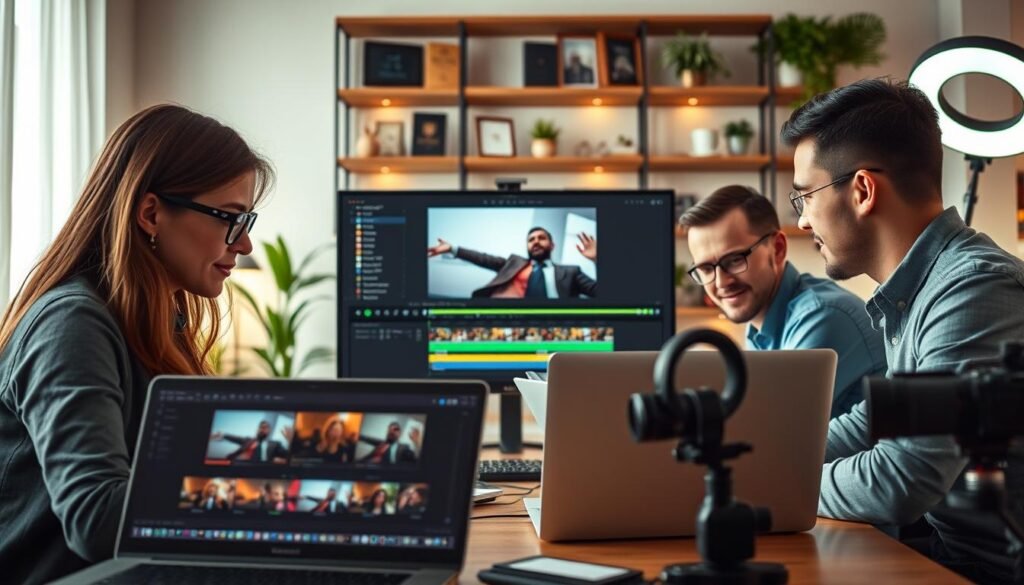
A sharp edit turns raw footage into a concise story that keeps viewers watching. We build every cut with retention in mind and link choices back to business impact.
Structuring the cut for retention: hook, body, payoff
Start with a fast hook that promises value in the first three seconds.
The body delivers proof and usable content, paced to prevent drop-off.
The payoff completes the promise and directs viewers toward the next step.
Captions and visual storytelling for silent viewers
Most people scroll with sound off. We burn captions into every edit and add clear on-screen highlights so the content reads without audio.
On-screen CTAs, lower-thirds, and brand-safe graphics
Place CTAs that match funnel intent early and at the end. Standardized lower-thirds and branded graphics keep posts consistent across channels and lift trust.
Quick wins: pacing, jump cuts, b-roll, and cleanup
- Tighten pacing and remove dead space with jump cuts.
- Use purposeful B-roll to illustrate claims and hide edits.
- Apply basic color correction and audio cleanup for polish.
| Goal | Editing Move | Impact |
|---|---|---|
| Retention | Hook + tight pacing | Higher watch-through |
| Accessibility | Burned captions | Wider reach |
| Conversion | Early CTA | More clicks |
Distribution that multiplies reach across social media, website, and email
A distribution plan makes each production effort pay off. We build the plan before publishing so the clip lands where it drives outcomes, not just a single social post.
Why posting once isn’t enough: repurposing across channels and platforms
Posting one time reduces ROI. We cut a core video into short clips, quote snippets, and platform‑native edits so content fits each platform’s audience and format.
This repurposing matrix turns one asset into a series of posts that sustain reach across campaigns and funnel stages.
Where to publish: social posts, ads, product pages, blog embeds, and newsletters
High‑impact placements go beyond feeds. We publish on our website, embed videos in product pages, add clips to help articles, and seed newsletters and paid ads.
Each placement maps to a funnel stage: broad social channels for awareness, product pages and email for decision, and the blog for discovery and SEO value.
Teasers, clips, and cross-posting workflows to extend campaign life
Teasers drive traffic to a longer hub like YouTube or our site. Short clips act as entry points that point viewers toward deeper content.
We save time with export presets, caption templates, and standardized thumbnails. A clear workflow lets us schedule cross‑posting across platforms without duplicated effort.
| Placement | Primary Goal | Format Example |
|---|---|---|
| Social channels | Awareness | 9×16 short clip |
| Website & product pages | Conversion | Embedded demo or testimonial |
| Email & newsletters | Consideration | Teaser + CTA |
Distribution is a multiplier. When we align channels, platforms, and posts with clear goals, our video work scales without a matching rise in effort.
Video SEO and discoverability: help search engines find and rank our videos
If search engines can’t find our media, we lose recurring organic demand for that content.
Embedding priority video on our website lifts time on site and supports page goals like conversion and education. We place clips near relevant copy and calls that match the page intent.
Hosting choice depends on intent. YouTube gives broad reach and SERPs visibility but can pull visitors off our site. Business-focused hosting offers cleaner embeds, fewer distractions, and better lead capture.
Technical basics matter: provide an accessible embed, ensure the page is crawlable, and add structured data (JSON-LD). Many platforms add JSON-LD automatically, but we should validate it.
Optimize titles and descriptions for target queries. Use keywords naturally, not stuffed, and write readable copy that serves users and search engines.
| Hosting | Pros | Cons |
|---|---|---|
| YouTube | High discoverability, SERPs placement | Distraction, reduced on-site leads |
| Business host (Wistia, Vidyard) | Lead capture, controlled UX | Lower native reach, paid tiers |
| Self-hosted | Full control, brand experience | Bandwidth, indexing work required |
Validation steps: check Google.com/video for the page URL, confirm thumbnail and metadata, and monitor compounding traffic. One well-optimized video can drive sustained site visits and leads.
Keep improving: measure performance and turn insights into the next campaign
Regular measurement turns guesswork into repeatable gains for our team. We track views, watch time, and engagement alongside business goals so results map back to clear goals and success.
We set a cadence: weekly checks for new posts and monthly reviews for trend-level results. That rhythm shows which creative moves — hook style, length, pacing, CTA placement, thumbnail, and platform — lift conversion and engagement.
We connect video performance to broader marketing metrics like landing page lift and customer behavior. Insights become a backlog: double down on winning formats and stop what underperforms.
For marketers, the aim is steady improvement. Our best content and the greatest success come from iteration, team feedback, and focusing on outcomes over one-off perfection.