Motion Graphics Designer Salary

Motion Graphics Designer Salary

We’ll walk through pay benchmarks for designers who work with motion and animation in the United States. Our goal is to turn raw numbers into practical guidance so we can decide which roles to target and which skills to invest in next.

Community data show wide ranges: Uxcel reports an average near $65,000 from over 300,000 designers, while a School of Motion poll found averages around $62,000 and $65,000 for freelancers. The BLS lists a higher median of $77,700 for related animator roles. We’ll explain why these figures differ and what each dataset measures.

We’ll define what typical pay includes — base, bonuses, overtime, day rates, and contract income — and set expectations for mixed full-time and freelance work. That frames the buyer’s guide we use to negotiate offers, choose target roles, and build a realistic career plan rather than chasing a single average.

Motion Graphics Designer Salary in the United States: Current Benchmarks and Pay Ranges

We present a compact view of current U.S. pay benchmarks and show how reported numbers map to real roles. Below we compare the most-cited data points so you can judge offers and plan next steps.

Typical salary per year: averages from reports and polls

Uxcel reports a U.S. average near $65,000 per year. School of Motion’s poll (2017) shows an average of $62,000 per year and a freelance average of $65,000.

Overall salary range: what low to high looks like

Ranges vary by source. Uxcel spans roughly $35K–$120K. School of Motion centers around $40K–$83K. BLS shows a wider market spread.

A modern office environment showcasing a diverse team of motion graphics designers at work. In the foreground, a South Asian female designer reviews vibrant motion graphic animations on her computer, wearing professional business attire. To the left, a Black male designer collaborates with a Hispanic female designer, both engaged in a brainstorming session with colorful sketches and digital tablets spread out. The middle ground captures a bright, sleek workspace with wall-mounted screens displaying various animated clips and performance statistics. In the background, large windows offer a sunny view of a city skyline, enhancing the energetic atmosphere. Utilize soft lighting to create an inspiring mood and opt for a wide-angle lens to capture the collaborative dynamic of the team. The image should evoke professionalism and creativity without any text or distractions.

Source Median / Avg Reported Range Notes
Uxcel $65,000 / year ~$35,000 – ~$120,000 Large designer sample; self-reported
School of Motion (2017) $62,000 / year $40,000 – $83,000 Includes freelancer average $65,000
BLS (May 2020) $77,700 median $42,390 – $142,750 Classified under Special Effects Artists & Animators
Glassdoor $67,059 median Examples: NBCU $102,653; ESPN $68,227 Voluntary reports + postings

How BLS figures compare to self-reports

BLS medians often sit higher because they include adjacent roles and higher-paying employers. Self-reported averages reflect varied contract mixes and smaller samples.

Quick decision filter: if an offer is below these ranges, ask about scope, overtime rules, benefits, and title accuracy before accepting.

How Much Do Motion Graphics Designers Make by Experience Level?

We outline pay bands tied to common experience levels and the responsibilities that come with them. Below we define entry, junior, mid, and senior roles the way hiring teams use them. Each level links years and duties to realistic pay expectations.

Entry-level

Entry roles (0–1 year) often start with a lower base while you build a portfolio and demo reel. Uxcel shows an entry average near $35,000 per year.

This tradeoff is typical: lower pay in exchange for time on real projects and mentorship.

Junior (1–3 years)

Junior designers typically own small deliverables and work in teams. Uxcel reports about $72,500, while Glassdoor’s 1–3 years signal is $59,590.

The gap reflects title differences, employer type, and whether benefits or freelance income are included.

Mid-level (3–8 years)

Mid-level roles handle bigger projects with more stakeholders. Uxcel’s benchmark is roughly $80,000 per year.

Expect longer timelines, tighter brand rules, and increased responsibility for process and quality.

Senior (8+ years)

Senior targets land much higher when the role includes leading systems, guiding people, or owning major campaigns. Uxcel cites about $110,000.

Some senior listings still pay mid-level rates when scope is narrow. Scan job descriptions for terms like “lead,” “own,” and “mentor” to spot true senior work.

  • Negotiation checklist by level: measurable outcomes, portfolio proof, project leadership, and clear process descriptions.
  • Career tip: pick roles that add responsibility gradually to raise pay without burning out.
Level Typical years Uxcel avg Glassdoor signal
Entry 0–1 $35,000
Junior 1–3 $72,500 $59,590
Mid 3–8 $80,000 $65,867 (4–6 yrs)
Senior 8+ $110,000 $69,881 (7–9 yrs)

Where the Money Is: Location, Industry, and Job Type Differences

A location, industry, and contract choice change earnings more than most people expect. We look at city data and BLS industry medians to show which markets and sectors pay above average.
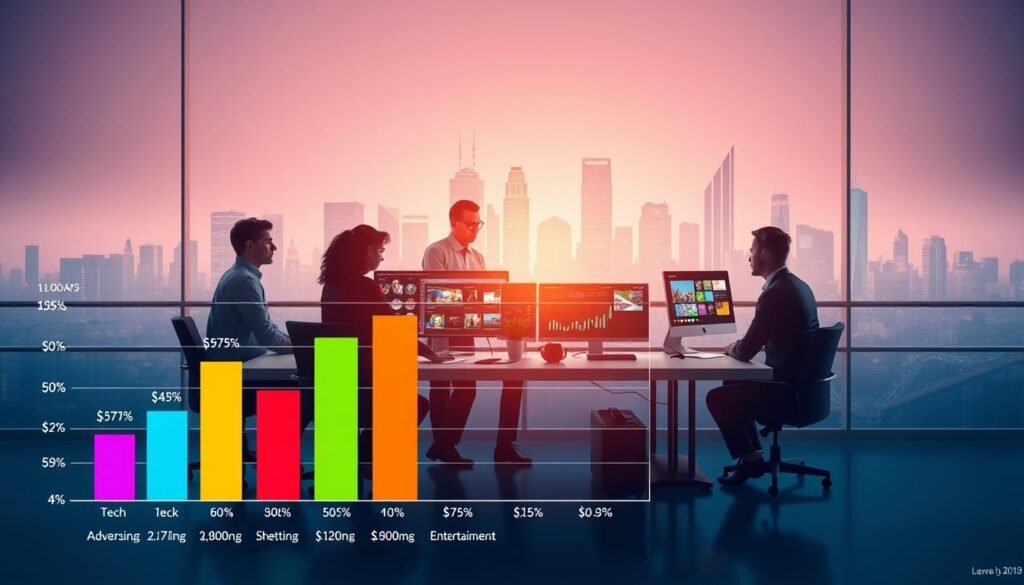
A vibrant and dynamic motion graphics design showcasing the concept of salary differences across various locations, industries, and job types for motion graphics designers. In the foreground, a stylized graphic representation of a salary chart, using colorful bars and icons for different industries such as tech, advertising, and entertainment. In the middle ground, a professional desk scene featuring diverse individuals in business attire collaborating on a project, surrounded by screens displaying animated graphics and data visualizations, reflecting the creative and tech-savvy nature of their work. The background should feature an abstract city skyline, symbolizing various job markets, lit with soft, ambient lighting that evokes a sense of innovation and opportunity. The overall mood is energetic and inspiring, highlighting the evolving landscape of motion graphics careers.

Top cities and the cost‑of‑living effect

San Francisco leads with an average near $85K and a wide range ($56K–$147K). That range shows high demand for niche skills and leadership roles.

Los Angeles and New York both average about $64K but differ in work patterns. LA skews contract-heavy; NYC mixes agency and in‑house jobs.

Industry pay differences

Industry Median (BLS, May 2020) Typical work
Motion picture & TV $92,350 Feature/episodic pipelines
Software publishers $82,330 Product UI and systems motion
Advertising & marketing $73,820 Campaign content for agencies
Computer systems design $69,200 Enterprise product and UI work

In‑house vs freelance

Freelance motion work can raise annual income for some designers but adds volatility and business overhead. Permanent roles offer steadier pay and benefits.

  • Choose a high‑cost city for density and agency pipelines.
  • Stay remote and specialize to compete without relocating.

What Actually Raises a Designer Salary: Skills, Tools, and Proof of Work

Let’s focus on the skills, proof points, and workflows that employers pay a premium for.

A sleek, modern workspace filled with high-tech tools for motion graphics design. In the foreground, a stylish laptop displays a vibrant portfolio demo reel showcasing dynamic animations and engaging graphics. To the right, a designer, dressed in professional business attire, is intently focused on the screen, taking notes on a notepad. The middle layer features a neatly organized desk with design software open, a tablet, and graphic design books, conveying a sense of creative flow. The background includes soft ambient lighting from large windows, illuminating the space while casting gentle shadows. Use a wide-angle lens perspective to capture the entire scene, focusing on the intricate details of the demo reel and the designer’s concentration, creating a professional yet inviting atmosphere that highlights creativity and skill.

Portfolio and demo reel standards

Proof of work means a clear portfolio and a tight demo reel that show thinking, not just polish. Label your role on each piece and show short breakdowns: styleframe → comps → final animation.

Tailor reels to the clients you want. For product roles, show UI motion and system work. For ads, show story and pacing.

Core skills that move pay

Employers reward storytelling, strong animation theory, and visual design fundamentals. These reduce revisions and make content perform better.

Color, type, and pacing are measurable outcomes. They link directly to retention, conversions, and fewer review cycles.

Specialized advantages and learning plan

3D and CAD lift you into high-value projects in film, product viz, and brand work. Advanced effects pipelines also open premium opportunities.

  • Pick courses by target industry: ads, product, or film.
  • Invest in networking and communication to turn projects into repeat clients.
Target Industry Best Skill Focus Recommended Learning
Advertising Story + effects Short narrative courses
Product System motion + collaboration UI motion & workflow courses
Film/TV 3D + advanced pipelines 3D/CAD and compositing courses

Making the Salary Data Work for Your Career Plan

We turn the numbers into a clear plan you can use to raise your pay and shape the next few years of your career. Pick a target per year based on your current experience and the range you want to hit.

Choose an industry and map a realistic gap between today’s designer salary and the next role. Use BLS medians, Uxcel averages, and live job posts to triangulate offers and tune expectations by city or remote work.

Decide if you prefer steady in-house jobs or contract work with higher upside and more business overhead. Refresh your portfolio quarterly, rebuild the reel to match target roles, and collect outcomes-based case studies.

Quick checklist: pick a salary target, ID two skill gaps, enroll in one course or mentor program, and reach out to people who can open doors to better projects.


FAQ

What are current benchmarks and pay ranges for motion graphics designer roles in the United States?

We track averages from industry surveys and recruitment reports. Entry-level positions typically start near the low end of the range, while mid-level roles cluster around the market average. Senior and lead roles at agencies, studios, and tech firms sit at the high end. Regional demand, company size, and project complexity push numbers up or down, so we recommend using local salary tools and recent job postings to get precise, up-to-date figures.

What is a typical salary per year according to designer reports and industry polling?

We rely on aggregated survey data and polling from professionals in animation, advertising, and software publishing. Those sources show a median annual pay point that aligns closely with broader creative-arts compensation, but niche experience in 3D or advanced effects often raises annual income. Keep in mind self-reported figures can vary by sample and reporting method.

How wide is the overall pay range in real job markets?

We see a broad spectrum: lower-paid roles often reflect small studios or freelance starting rates, while high-end positions reflect senior studio leads, in-house roles at large tech firms, or experienced contractors with strong portfolios. Cost of living and demand in specific cities create meaningful spread across the range.

How do Bureau of Labor Statistics median wages compare to self-reported designer salaries?

We find that BLS figures offer a conservative, standardized baseline. Self-reported salaries from professionals and recruiters sometimes show higher medians, especially when specialized skills, licensing, or contract work are included. Use both sources to triangulate realistic expectations.

What can new entrants expect to earn at the entry level while building their first portfolio?

We advise newcomers to expect modest starting pay as they develop demo reels and client experience. Entry pay improves quickly with a strong portfolio and targeted internships. Freelance project work can accelerate earnings if the work is marketed well.

What are typical junior-level salaries for early-career creatives working on team projects?

We note that junior roles usually offer steady learning environments and incremental raises. Compensation reflects hands-on experience with toolsets and teamwork. Benefits, mentorship, and exposure to larger projects often add long-term value beyond base pay.

How does mid-level compensation change as project scope and responsibility grow?

We see mid-level professionals moving into more complex briefs, owning significant project segments, and mentoring others. Pay rises accordingly, especially when billing rates, client trust, or in-house responsibilities increase. Demonstrable results and leadership on projects are key triggers for raises.

What salary targets should senior creatives expect when leading high-impact work?

We find senior leads command top-tier pay reflecting technical mastery, client relationships, and project leadership. Roles that bridge strategy, animation systems, or pipeline development often come with higher compensation and more generous benefits or profit-sharing options.

Which cities pay the most and why do cost of living and demand shift compensation?

We observe higher pay in major media and tech hubs where demand outstrips local supply. Elevated living costs, concentration of studios, and client budgets all push rates higher. Remote hiring trends have softened this gap in some cases, but location still matters for many employers.

How do pay levels differ across industries like film, TV, software publishing, advertising, and systems design?

We find that entertainment and advertising often pay well for project-based work with tight deadlines, while software and systems design can offer steady salaries and product-driven roles. Each sector values different skill mixes—storytelling and animation for film/TV, and interface motion or pipeline skills for software.

How does freelance contract work compare to in-house roles for income potential?

We see freelancers able to earn more per hour but face gaps between gigs, administrative tasks, and self-employment costs. In-house roles provide steady income and benefits. The best choice depends on personal priorities: flexibility and higher short-term rates versus stability and long-term perks.

Must we live in a major city to earn better pay in this field?

We no longer recommend relocation as the only path. Remote work has widened access to high-paying roles. However, certain projects and networking opportunities still favor big-city presence, so weigh career goals, lifestyle, and local demand before deciding.

What portfolio and reel standards help secure higher-paying positions and clients?

We stress concise, targeted demo reels that showcase storytelling, pacing, technical range, and results. Employers look for clear problem-solving, polished deliverables, and relevant samples for the job. Regular updates and case notes that explain your role on projects boost credibility.

Which core skills most reliably increase earning potential?

We recommend strengthening visual design fundamentals, animation principles, and narrative craft. Communication and collaboration skills also matter: being able to present concepts to clients or lead a team translates directly into higher pay.

What specialized skills give a market edge, such as 3D, CAD, or advanced effects workflows?

We find that 3D modeling, rendering pipelines, and advanced compositing open doors to premium projects. Mastery of software like Cinema 4D, Houdini, or dedicated CAD tools often commands higher rates, especially when combined with strong artistic sensibility.

How do courses, networking, and communication skills translate into higher rates over time?

We encourage continuous learning and targeted networking. Industry courses, mentorships, and visible community work build reputation. Clear client communication reduces revisions and increases repeat business, which raises effective hourly and project rates.

How can we use salary data to build a realistic career plan?

We recommend mapping target roles, required skills, and milestone pay levels. Use a mix of market reports, job listings, and professional networks to set realistic timelines for skill development, portfolio upgrades, and compensation goals.

Similar Posts

  • How Motion Graphics Work

    We define How Motion Graphics Work by turning static design elements into clear, moving visuals that communicate fast. In practice, motion graphics means using text, images, shapes, and animation to support a video’s style and deliver facts in seconds. In this guide we set expectations. We will cover core concepts, common workflows, tools, and easy…

  • Free Motion Graphics Templates

    We built this guide for marketers, creators, in-house teams, and editors across the United States who need faster turnaround on video work. These ready-to-edit assets help us ship polished motion without building each element from scratch. We use packs for text overlays, animated logos, clean transitions, presentations, product showcases, and social posts. Editing often starts…

  • How to Make Motion Graphics

    We’ll open with what this guide means in real marketing and design work. We explain what we can produce by the end and who benefits most: marketers, designers, content teams, and small businesses. Expect clear timelines. Simple clips can take a few hours, while larger projects need days or weeks. We show how scope affects…

  • Motion Graphics for Beginners

    We start with a clear aim: help us understand motion graphics, learn core design principles, and choose a practical way to get started. This short guide sets expectations and keeps projects small so we avoid overwhelm. We don’t need complex illustration skills on day one. Simple text, shapes, and clean transitions let us communicate and…

  • Video Marketing Tips

    We open with what this how-to guide delivers: practical guidance we use to plan, create, publish, and improve short-form and long-form content that drives measurable results for US brands. Our approach is systematic. We move from why video matters now to how we build a repeatable content engine that ties to business goals and brand…